



‹
›
‹
›
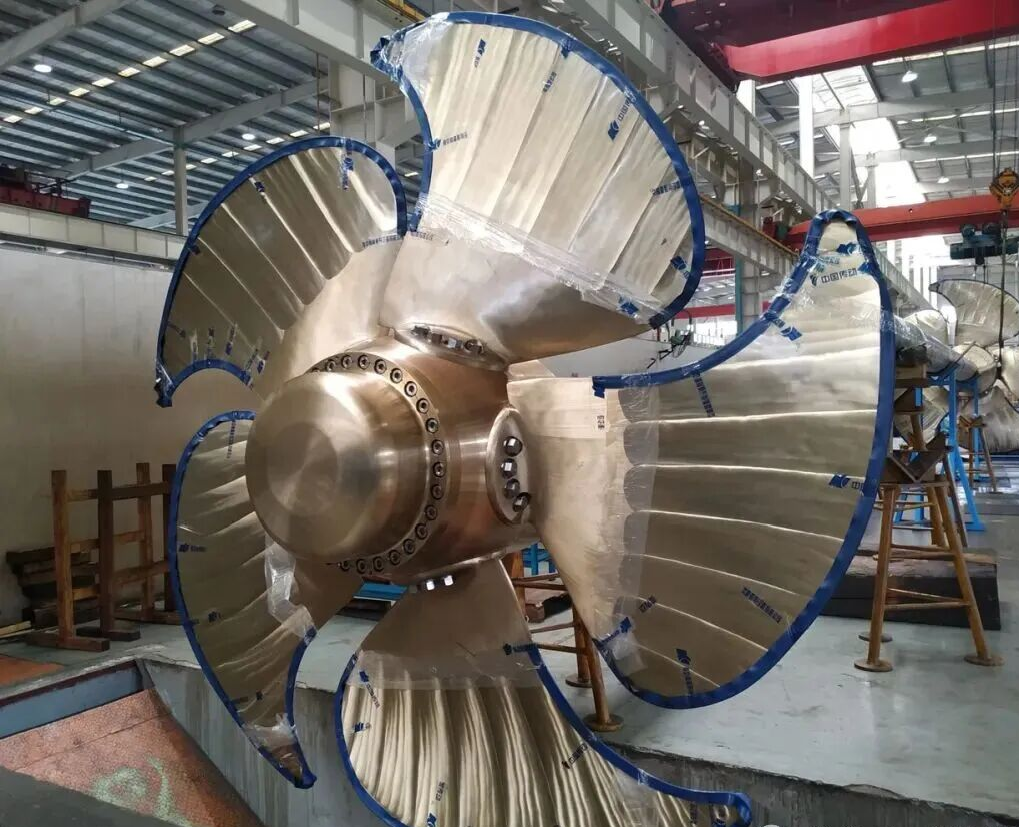
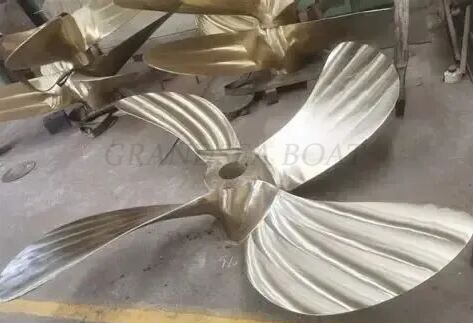
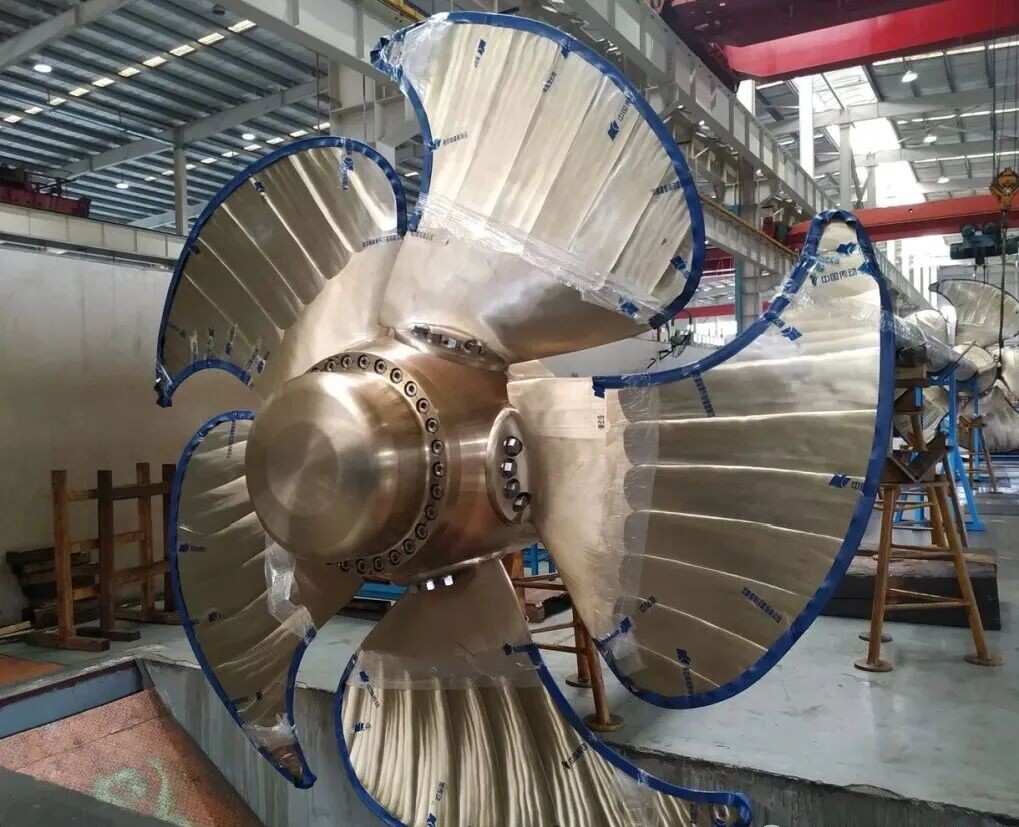
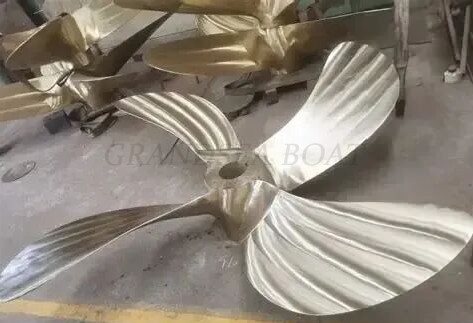
4 vs 5 Blades: The Science of Ship Propeller Design
Efficiency & Operational Fit:
4-Blade: Offers 2%–5% higher efficiency under steady low-to-medium speed conditions due to less blade-to-blade flow interference, making it ideal for cost-sensitive bulk carriers and tankers.
5-Blade: Better handles speed fluctuations with slower thrust degradation (15%–20% lower loss), making it suited for variable speeds.
Vibration & Noise Damping:
5-Blade: Reduces pressure fluctuations by over 30% and avoids structural resonance (due to the prime number of 5 blades). It lowers acoustic signatures significantly—vital for naval stealth (e.g., Arleigh Burke-class destroyers) and high comfort standards in luxury yachts (<45 dB cabin noise).
Anti-Cavitation & Structural Durability:
4-Blade: Feature thicker roots and higher impact resistance (+20%), making them durable against debris in shallow waters or tugboat operations.
5-Blade: Distributes load across more blades, lowering surface pressure gradients and pushing the cavitation threshold to higher speeds (essential for 30+ knot naval operations).
Economics & Maintenance:
4-Blade: 40%–60% cheaper to produce, simpler to maintain, and features lower casting defect rates.
5-Blade: Requires precision manufacturing and complex CFD optimization, incurring higher upfront costs that are justified primarily by specialized performance requirements or long-term fuel savings from hydrodynamic retrofits.


Awesome! Share to:
Related Posts
- Marine Diesel Generators: Structure, Working Principle and Applications on Boats and Passenger Ferries
- Commercial Fishing Boat Freezing Systems: Solutions for Longline Fishing Boat and Purse Seine Fishing Boat
- Boat Hull Protection: Corrosion Prevention for Aluminum Boats and Fiberglass Boats
- From Speed Boats to Cargo Boats: How Engine Power Defines 4 vs. 5-Blade Propellers
- How Automatic Baiting Machines Revolutionize Commercial Fishing Boat?

More than 24 years of shipbuilding experience.
We build more than 300 boats of various sizes and types every year,
We have a professional boat design team